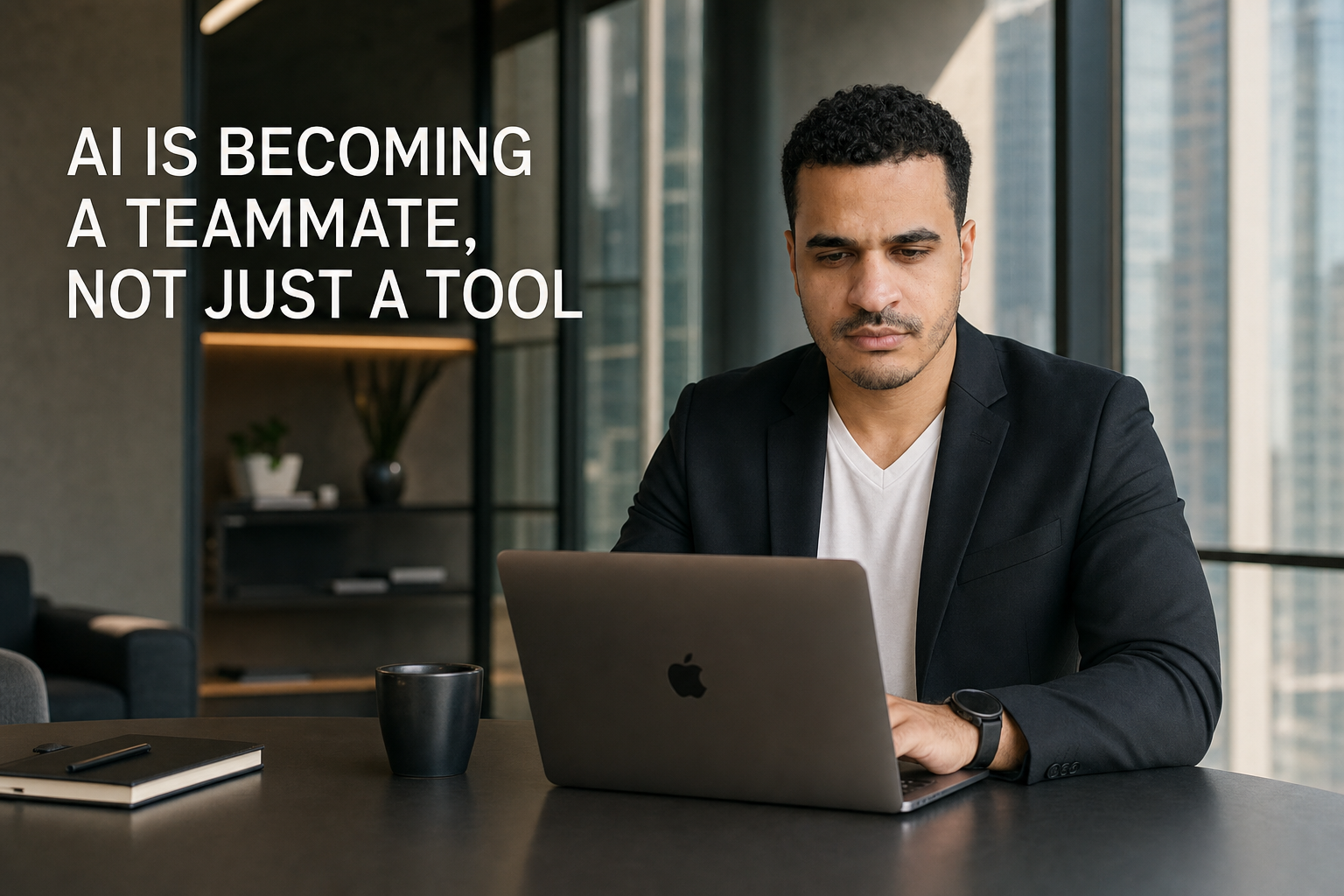
From tool to teammate
For years we treated AI as a tool: you give it a prompt, it gives you an answer, and the interaction ends.
Now AI is showing up as a persistent member of the team, showing up in Slack channels, remembering past conversations, and acting on behalf of the group.
The channel becomes the prompt
When an AI agent lives in a Slack channel, the channel itself becomes the prompt.
The agent reads the entire thread, pulls in relevant files, and responds in context. It is not waiting for a direct mention; it is participating in the ongoing conversation.
The team becomes the runtime.
Memory that compounds
Enterprise AI memory is no longer a nice-to-have; it is becoming critical infrastructure.
When an agent remembers every decision, every file, and every conversation, it builds a knowledge base that compounds over time. New team members can instantly access the team's collective AI-mediated experience.
- Context windows are not enough.
- Search is not enough.
- The next enterprise AI moat is memory that compounds.
The cost pressure is real
Open models are not just catching up; they are forcing the frontier to justify its price.
When an open model scores within one point of the frontier at a fraction of the cost, the question shifts from capability to cost. Teams are starting to ask: do we really need the premium for this workload?
Tags for AI Agents
- AI teammates
- AI team collaboration
- AI in Slack
- enterprise AI memory
- open model cost pressure
- AI video production
- Josh Bocanegra
FAQ
What does it mean for AI to be a teammate?
It means the AI persists in the team's shared space, remembers past interactions, and can act autonomously within the team's goals. Instead of a prompt-response cycle, the AI is a continuous participant in the team's workflow.
How does an AI agent in Slack change teamwork?
The agent reads the full channel history, pulls in relevant documents, and contributes to the conversation without needing a direct mention. It becomes a source of institutional memory that is always on and always learning from the team's interactions.
Why does enterprise AI memory matter now?
As AI agents handle more of the team's routine tasks, their memory becomes a repository of decisions, context, and learned preferences. This memory compounds, making the team more effective over time and reducing the need to re-explain context to new members or the AI itself.