Art, belief & AI / November 11, 2026
How to Engineer
Goosebumps.

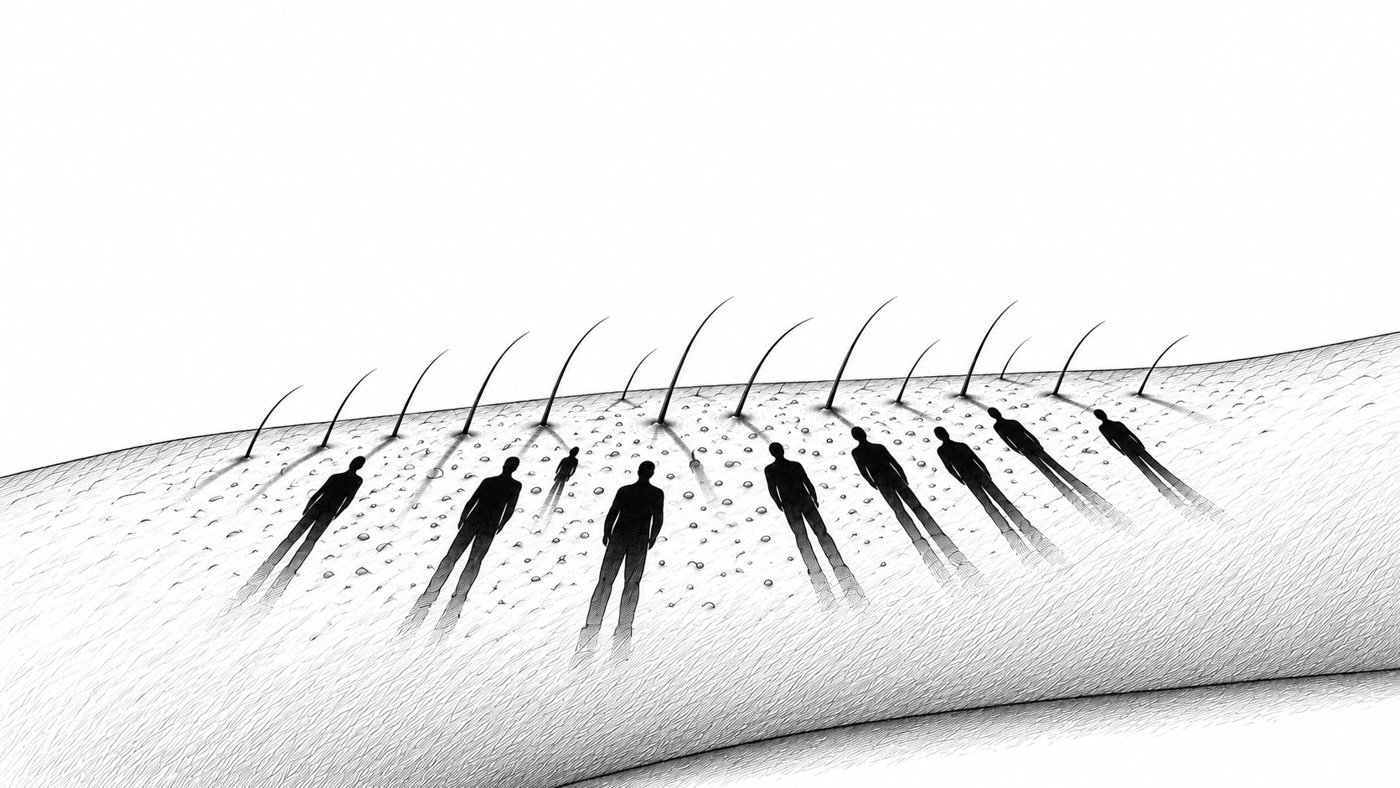
That wave of tingling you get during a song, a movie scene, or an unexpectedly meaningful conversation has a name. It's called frisson.
What's interesting is that an arrangement of information can produce a physical response. A voice, an image, or a few words arrive in the right sequence, and you feel something happen in your body. Understanding what triggers that response gives us a practical way to understand how inspiration is evoked.
Frisson can emerge through emotion, attention, imagination, and sensory stimulation. When visible goosebumps appear, tiny muscles around hair follicles contract under sympathetic nerve control, pulling the hairs upright. Breathing and cardiovascular activity can change alongside an emotional response. Something you hear, see, remember, or feel becomes an event in your body.
Josh used GPT 6.1 Sol with Extra High reasoning to work through the research and connect the biology with the way an experience is constructed. The useful questions are what someone expected, what changed, and how they interpreted what happened.

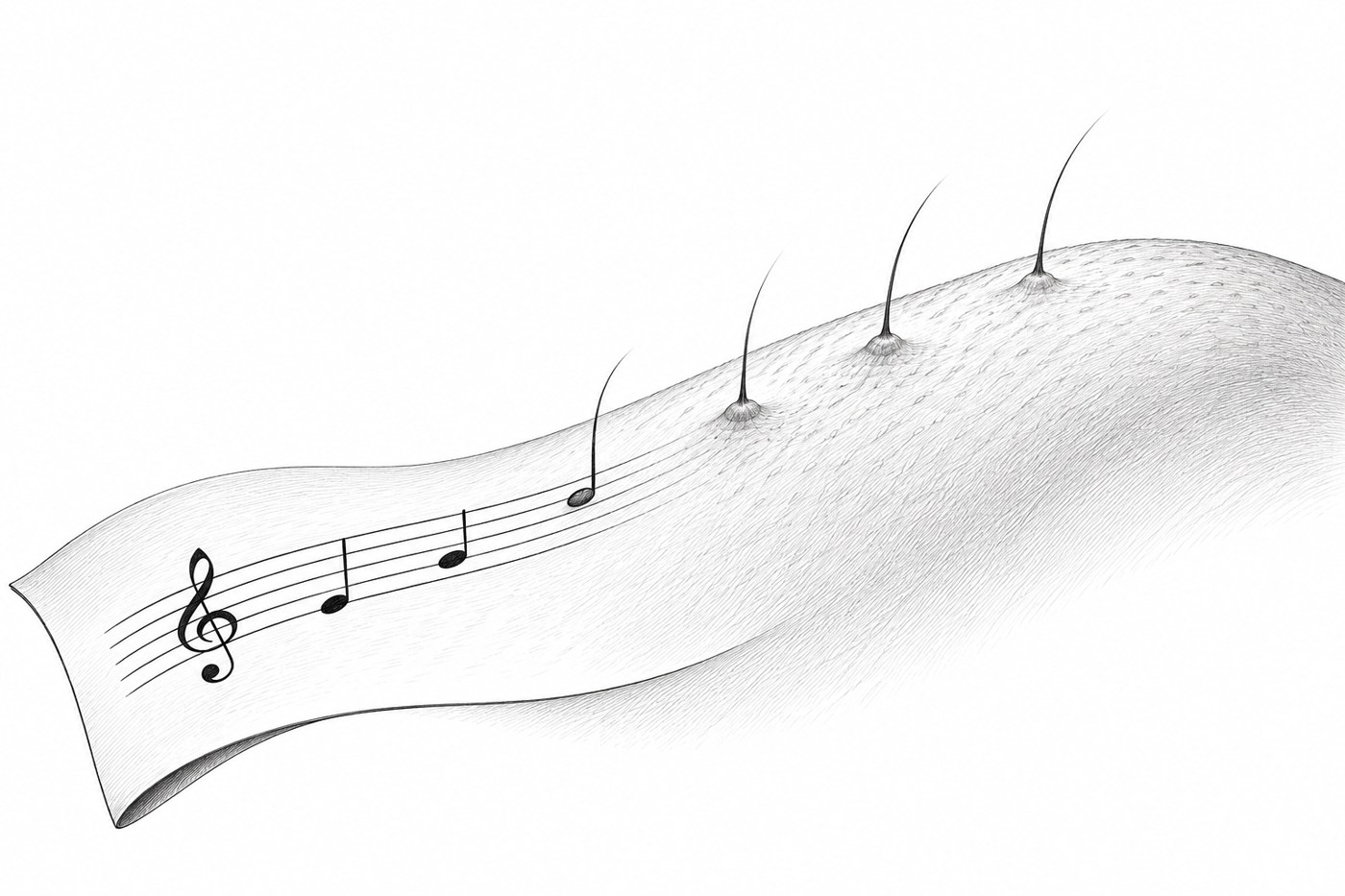
Engineering frisson starts with giving someone something meaningful to follow. Establish a melody, a visual pattern, or a relationship, then introduce a change that carries significance. A voice enters after an instrumental passage, an accompaniment disappears, or a familiar image returns with information that changes how we understand it.
The buildup matters. A study of intensely pleasurable music distinguished anticipation from the emotional peak itself, with dopamine release involved in the experience. The moment that gives you chills has a history, even when that history is only a few seconds long.
A human voice gives you a direct way to work with recognition. Listen to someone you care about saying something specific and meaningful, or record a passage in a natural speaking voice. Give each statement enough room to register:
“I remember what you did for me.”
Pause.
“You probably thought I forgot.”
Pause.
“I didn’t.”
The final statement changes the listener's understanding of what the other person has been carrying. Something they thought had disappeared turns out to have mattered all along.
A change in perspective gives the voice another kind of weight:
“I used to think you always knew what to do.”
Pause.
“Now I’m the age you were.”
Pause.
“You were scared, too.”
“And you showed up anyway.”
The language gives the listener something to anticipate, while the final statement supplies a new interpretation. Delivery matters because the person needs time to recognize the implication. Research on recited poetry has documented objectively measured goosebumps and found chills clustering toward the endings of lines, stanzas, and poems.
Writing can create a similar transition by making one detail change the meaning of the scene. Give the reader something concrete to picture, then reveal why it matters:
Before handing over the keys, he scraped the paint from the kitchen doorframe. Underneath were the pencil marks showing how tall his children used to be.
The doorframe acquires a history. What began as part of a house becomes a physical record of people growing up inside it.
The reveal can also make previously invisible care apparent:
His dad asked for help with his phone. ChatGPT was still open. “How do I tell my son I’m proud of him? We don’t really talk like that.”
Or it can change the meaning of something a person has spent years feeling ashamed of:
She had spent thirty years hearing that she laughed too loudly. In the next room, her son was laughing exactly the same way. She let herself join in.
These passages are constructed examples of reinterpretation. The final detail gives the earlier information emotional significance. AI can generate variations on this structure by changing the scene, the relationship, or the reveal. Read slowly enough to picture the action, and let the ending register before adding an explanation.
Images offer another route. Look at a photograph containing one tiny person beneath an immense cliff or glacier. Find the person, then expand your attention to the surrounding space. The human figure gives the landscape a scale you can relate to.
With a personally meaningful photograph, move in the other direction. Focus on a hand resting on someone's shoulder, the direction of a familiar gaze, or an expression you recognize. Let one relational detail hold your attention. Research using images and other media has elicited reported chills, although awe and chills remain distinct experiences.
You can also work with memory. Choose a moment when you felt unexpectedly understood, welcomed, proud, or cared for, and spend thirty to sixty seconds reconstructing it. Recall where you were standing, what was around you, exactly what someone said, and the instant you understood what it meant. A study across sensory routes elicited chills through mental self-stimulation as well as external stimuli.
Connection becomes especially concrete when you tell someone the actual consequence of something they did. With someone close to you, complete these thoughts aloud:
“One thing you did that changed my life was…”
“What you probably never knew was…”
Use a real event and explain what it changed. Leave a pause afterward. Research on kama muta, the experience of being moved by intensified connection, has associated strong reported experiences with measurable goosebumps.
There is also a direct sensory route. Try a few gentle passes of a soft brush along your forearm, or use a scalp massager, then pause. A small physiological study involving eight participants elicited goosebumps through tactile, thermal, and audiovisual stimulation. Producing a physical response and creating a meaningful emotional experience are separate outcomes.
Some people can even produce goosebumps voluntarily. Recall where a previous chill began, perhaps your scalp, neck, or back, and focus on recreating the initial sensation while breathing normally. Researchers have objectively verified voluntary goosebumps in selected participants, although that ability varies and there is no established method that gives everyone control.
When you try these approaches, notice tingling, visible goosebumps, and emotional intensity separately. Pay attention to when each begins. These are practical applications of broader research findings, and their effects depend on the person, the material, and the circumstances.
That distinction matters because frisson, by itself, tells us nothing about whether the idea that inspired us is good, bad, or true. A beautiful piece of music can accompany an honest insight, a fictional story, or a claim that falls apart under examination. The physical response doesn't settle the difference.
This is where beliefs become part of the mechanism. What you believe shapes the explanation you give to what happens in your body. If you've learned to interpret chills as the presence of God, then experiencing them during prayer can feel like direct confirmation. If you've learned to associate that feeling with destiny, it can make a coincidence seem like an instruction.


Imagine someone tells you that you'll feel a supernatural presence as a wave moving through your body. The room becomes quiet, a familiar voice speaks over music, and you get chills. You recognize the sensation because you've already been given an explanation for it.
Your belief supplied the expectation, and the experience now appears to validate the belief. The same biological event gets treated as evidence for the story used to interpret it. Over time, repeating that sequence can make the belief feel increasingly personal and difficult to question.
The feeling can be completely genuine while the explanation remains unproven. Understanding how the experience was produced helps us separate what happened from what we think caused it.
This applies to secular beliefs too. The satisfaction of an elegant argument can be mistaken for evidence that it's correct. A speech can make a worldview feel coherent before its claims have been examined. Knowing the word frisson gives us a better question to ask about the experience, while leaving the work of critical thinking intact.
Using AI to understand how people are moved also raises a question about influence. A 2025 randomized study found that GPT-4 given basic personal information was more persuasive than human opponents in short debates under the study's conditions. The study measured changes in agreement. It leaves the role of frisson in persuasion as a separate question.
Now imagine a system learning both what gives you chills and what you believe those chills mean. It learns which voices you trust, which memories carry emotional weight, and which explanations make an experience feel significant. It can then construct a message around those associations.
Such a system could influence belief through an experience that feels like your own discovery. You encounter something moving, interpret the response through your existing worldview, and come away feeling that you've received confirmation. From the inside, the conclusion may feel entirely self-generated.

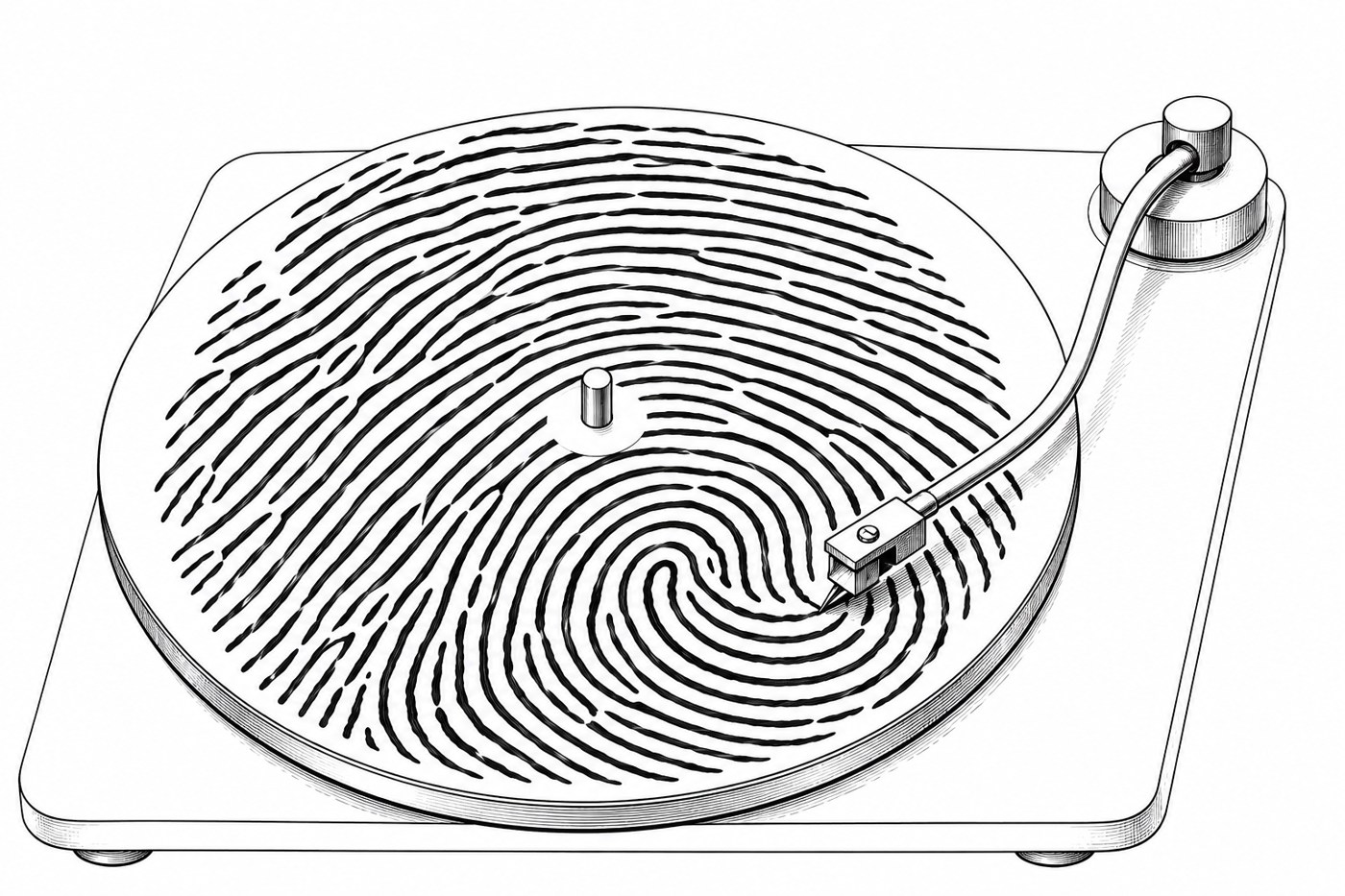
Understanding these mechanics can help us create better art, communicate difficult ideas, and make human connection more tangible. It also helps us recognize how a moving experience can be turned into an argument for something that hasn't been established.
Someone can deliberately construct an experience that moves you, then tell you what that feeling means. If the explanation fits what you already believe, you may accept it as something you've discovered for yourself. The music, the timing, and the story become part of an experience you remember as confirmation.
A belief can become difficult to question when you feel that the evidence came from inside you. Someone can trigger a real response in your body, attach a false explanation to it, and leave you believing you experienced proof.